Bratislava’s Riverside Retreat: Medieval Alleys and Central European Charm
Bratislava, the capital of Slovakia, is a city of quiet elegance and undeniable charm, sitting gracefully along the banks of the Danube River. Though often overshadowed by its larger Central European neighbors, Bratislava possesses a unique character that blends medieval history, Habsburg-era grandeur, and a modern cultural vibrancy. The city’s compact size allows for an intimate exploration of its winding cobblestone streets, fairy-tale castles, and picturesque riverside promenades. With its welcoming atmosphere, rich heritage, and thriving café culture, Bratislava offers a perfect retreat for those seeking an authentic and less touristy experience in the heart of Europe. Whether wandering through the medieval Old Town, admiring sweeping views from Bratislava Castle, or savoring a glass of Slovak wine in a quiet square, visitors will find that this riverside gem holds a captivating charm that lingers long after they leave.
Bratislava’s Old Town: A Walk Through History
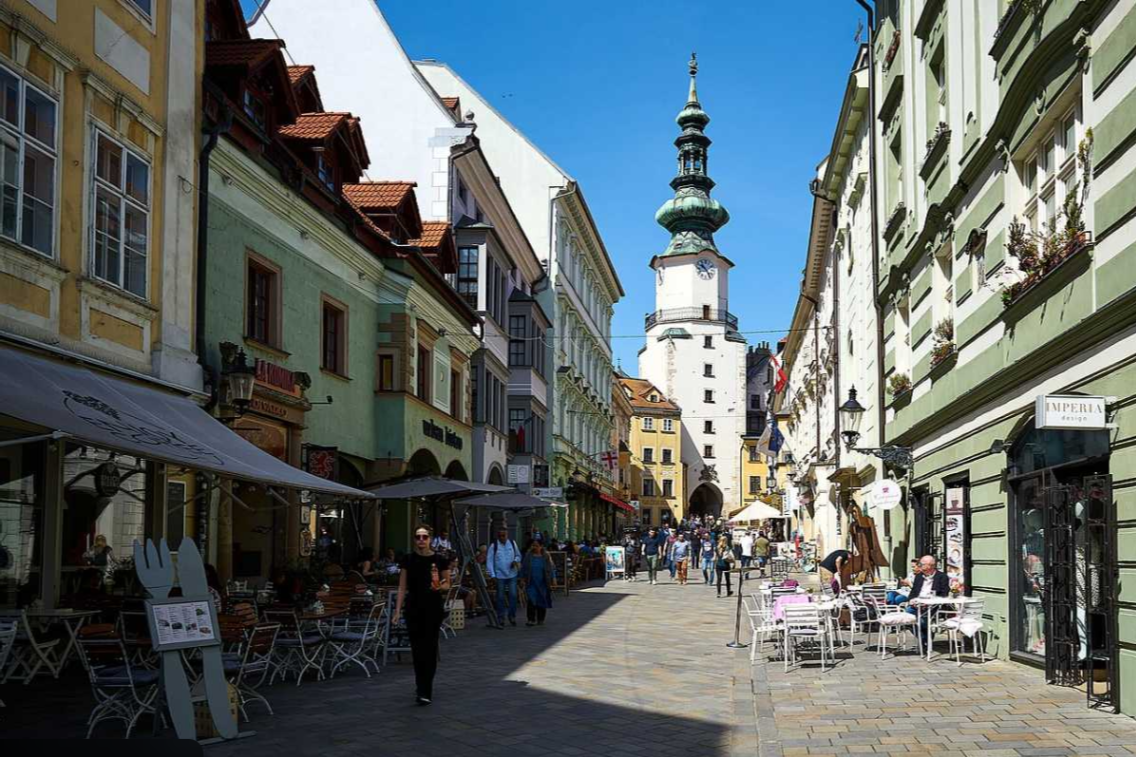
Bratislava’s historic core, the Old Town (Staré Mesto), is a beautifully preserved district that tells the city’s long and complex history through its architecture and narrow medieval alleys. The main entrance to this charming quarter is through Michael’s Gate, the last remaining gate of the medieval city walls. Dating back to the 14th century, the gate houses a small museum and provides excellent views over the red rooftops of the city from its tower.
At the heart of the Old Town lies Hlavné Námestie, the main square, lined with pastel-colored buildings, elegant facades, and open-air cafés. Here, visitors can admire the Old Town Hall, a Gothic-Renaissance structure that now houses the Bratislava City Museum, offering insight into the city’s past. A short walk away, the Primate’s Palace stands as a stunning example of neoclassical design, famous for its Hall of Mirrors and historic tapestries.
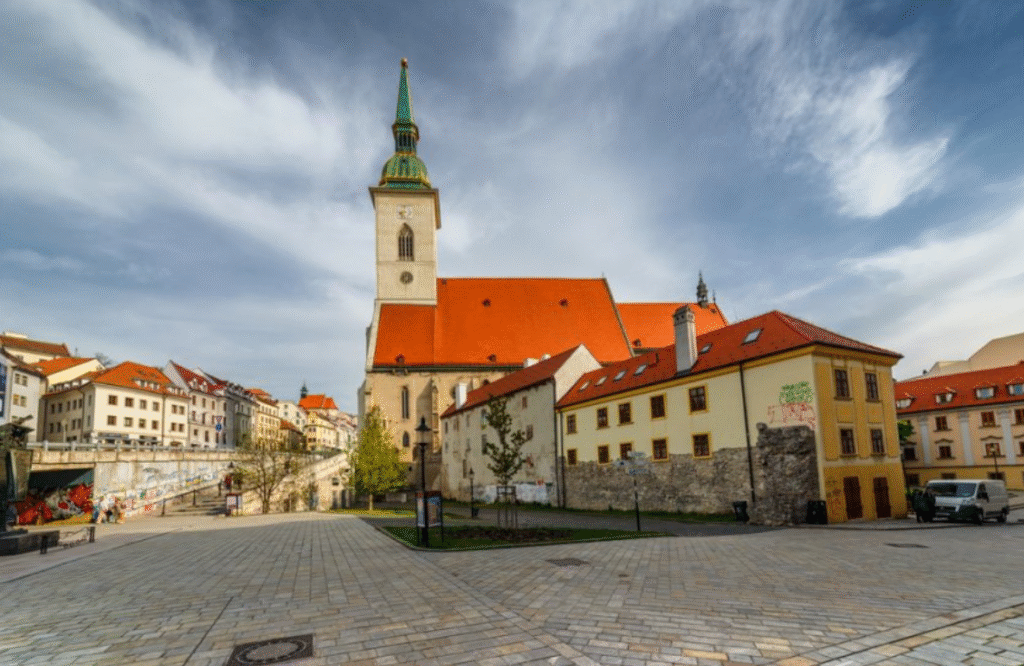
One of Bratislava’s most famous landmarks is St. Martin’s Cathedral, a Gothic masterpiece that once served as the coronation church for Hungarian kings. The cathedral’s soaring spire and intricate interior reflect its regal past, while its crypt and side chapels offer a quiet place for reflection. Nearby, visitors will find hidden courtyards and tucked-away alleyways leading to charming cafés, artisanal shops, and local bistros serving traditional Slovak cuisine.
The Old Town is also home to quirky attractions, such as the whimsical statues that dot the streets. Among them is Čumil, the bronze sculpture of a man peeking out from a manhole, delighting visitors with its playful touch to the city’s otherwise historical ambiance. These small details, along with street musicians and bustling marketplaces, give Bratislava’s Old Town a warm and welcoming character.
Bratislava Castle and the Danube: The City’s Iconic Views
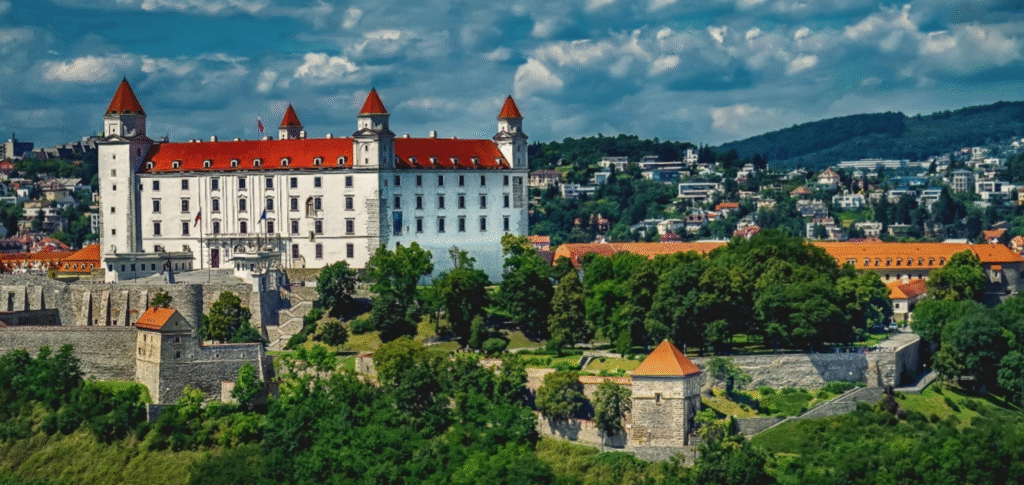
Perched atop a hill overlooking the Danube, Bratislava Castle is the city’s most iconic landmark. Its distinctive white walls and four corner towers dominate the skyline, offering panoramic views of the river and beyond. The castle, which dates back to the 9th century, has been rebuilt multiple times, reflecting various architectural styles from Gothic to Renaissance. Today, it houses the Slovak National Museum, which showcases Slovakia’s rich cultural and historical heritage.
From the castle’s terrace, visitors can take in breathtaking views of the Danube winding its way through the city, with glimpses of Austria and even Hungary on a clear day. The castle gardens, carefully restored to their Baroque-era elegance, provide a tranquil escape from the bustling streets below.
The Danube River plays a central role in Bratislava’s identity, serving as both a trade route and a scenic backdrop to the city’s daily life. The riverside promenade is a favorite spot for locals and tourists alike, offering a leisurely walk past modern cafés, green parks, and art installations. River cruises provide a different perspective of the city, with routes leading to the ruins of Devín Castle, a dramatic fortress perched on a cliff where the Danube and Morava rivers meet. Devín Castle, one of Slovakia’s oldest historical sites, is a must-visit for history enthusiasts, offering spectacular views and fascinating legends of knights and medieval battles.
One of the most striking modern structures along the river is the UFO Bridge, officially known as the SNP Bridge. With its futuristic design and observation deck that resembles a flying saucer, the bridge is an architectural contrast to the city’s historic buildings. From the top, visitors can enjoy sweeping views of Bratislava, the Danube, and the surrounding countryside, making it a prime spot for sunset photography.
A Taste of Slovak Culture: Cuisine, Wine, and Local Traditions
Bratislava’s culinary scene is an exciting blend of traditional Slovak flavors and modern European influences. While the city’s dining culture has been shaped by centuries of Austro-Hungarian influence, it remains deeply rooted in Slovak traditions. A visit to one of the city’s many local restaurants is the perfect way to sample regional specialties such as bryndzové halušky (potato dumplings with sheep cheese and bacon), kapustnica (cabbage soup), and zemiakové placky (crispy potato pancakes).
One of Slovakia’s best-kept secrets is its wine culture, and Bratislava, located in the Little Carpathians wine region, offers excellent opportunities for wine tasting. The city’s wine cellars and cozy wine bars serve high-quality local vintages, particularly aromatic white wines made from the Grüner Veltliner and Riesling grape varieties. Many visitors choose to take a short trip to the surrounding vineyards, where traditional wineries welcome guests with tastings and insight into Slovakia’s long winemaking tradition.
The café culture in Bratislava is also a cherished part of daily life. From elegant Viennese-style coffeehouses to contemporary specialty coffee shops, the city offers a variety of options for those looking to enjoy a relaxing break. Local favorites include Café Mayer, known for its classic pastries, and Urban House, a trendy café that blends modern aesthetics with a cozy atmosphere.
Bratislava is also home to a vibrant arts and music scene, with cultural festivals and live performances taking place throughout the year. The Slovak National Theatre stages world-class opera and ballet, while smaller venues like the Slovak Philharmonic host intimate classical concerts. Folk traditions remain an essential part of the city’s identity, with seasonal markets, folk dance performances, and handcrafted souvenirs keeping Slovakia’s heritage alive.
Bratislava is a city that effortlessly combines history, culture, and scenic beauty. From its medieval Old Town and majestic castle to its riverside promenades and thriving café culture, the city offers a delightful mix of relaxation and exploration. Whether discovering hidden courtyards, savoring traditional Slovak cuisine, or gazing out over the Danube from the castle’s terrace, visitors will find that Bratislava is a destination rich in charm and authenticity. As one of Central Europe’s most underrated capitals, it remains a welcoming retreat for those seeking an experience that is both intimate and full of discovery. With its blend of medieval alleys, riverfront tranquility, and Central European warmth, Bratislava stands as a hidden gem waiting to be explored.