Bucharest’s Belle Époque: Romania’s Little Paris and Its Grand Contrasts
Bucharest, the capital of Romania, is a city of striking contrasts, where the elegance of its Belle Époque past coexists with the brutalist architecture of its communist era. Once known as “Little Paris” for its wide boulevards, grand palaces, and flourishing artistic scene, Bucharest has undergone decades of transformation, emerging as a dynamic metropolis filled with history, resilience, and a unique blend of old and new. While scars from its communist past remain visible, the city’s vibrant café culture, flourishing nightlife, and ongoing restoration efforts highlight its cultural revival. From the ornate palaces and art nouveau buildings of the past to the monumental structures of its socialist era, Bucharest is a city that tells a fascinating story of ambition, hardship, and renewal. Whether wandering through its historic streets, admiring its architectural gems, or immersing in its thriving creative scene, visitors will find Bucharest to be a city of contrasts that captivates at every turn.
The Belle Époque Legacy: Bucharest’s Parisian Influence
Bucharest’s golden age came in the late 19th and early 20th centuries when Romania’s aristocracy and intellectual elite sought to shape their capital in the image of Paris. The city’s architecture, fashion, and cultural life reflected strong French influences, giving rise to grand boulevards lined with neoclassical and Beaux-Arts buildings. Today, traces of this era remain in the city’s most beautiful landmarks.
One of the most iconic symbols of Bucharest’s Belle Époque is the Romanian Athenaeum, an exquisite concert hall and cultural institution. Its circular facade, Corinthian columns, and beautifully frescoed interior make it one of the city’s most breathtaking buildings. As the home of the George Enescu Philharmonic Orchestra, it continues to serve as a prestigious venue for classical music lovers.
The city’s historic Lipscani district, once the heart of Bucharest’s merchant life, is another window into the past. This lively quarter is a maze of cobblestone streets, hidden courtyards, and grand 19th-century townhouses, many of which have been restored and repurposed into cafés, restaurants, and boutiques. The Stavropoleos Monastery, a stunning 18th-century church adorned with intricate carvings and frescoes, stands as a reminder of the city’s spiritual heritage amidst the surrounding energy of Lipscani’s bustling nightlife.
Another architectural treasure is the CEC Palace, a magnificent domed building that once housed Romania’s oldest savings bank. Designed in an eclectic Beaux-Arts style, the palace remains one of Bucharest’s most photogenic landmarks, symbolizing the city’s once-thriving financial and cultural standing in early 20th-century Europe.
The Arcul de Triumf, inspired by its Parisian counterpart, was built to commemorate Romania’s independence and stands proudly on Kiseleff Boulevard. This grand avenue, lined with historic mansions and embassies, provides a glimpse into Bucharest’s aristocratic past and is often compared to Paris’ Champs-Élysées.
The Communist Shadow: Bucharest’s Architectural and Cultural Transformation
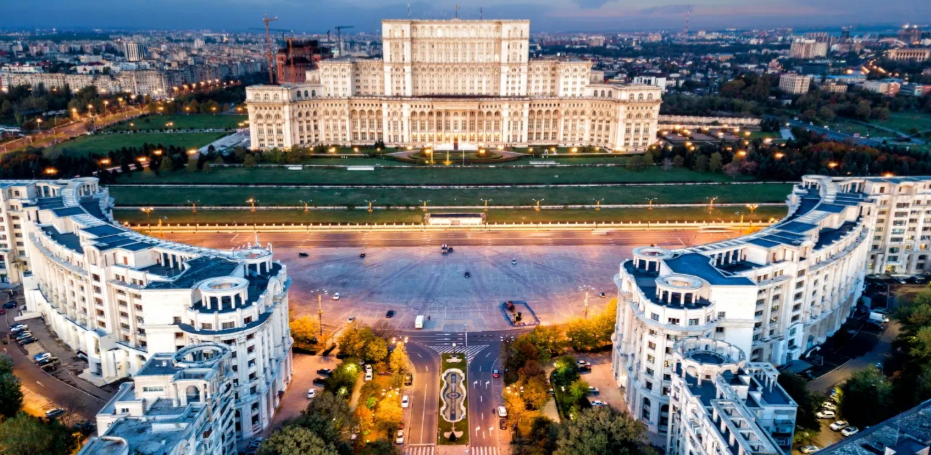
Bucharest’s transformation under Nicolae Ceaușescu’s communist regime brought radical changes that reshaped the city’s landscape. The most notorious symbol of this era is the Palace of the Parliament, an immense and controversial structure that remains one of the largest administrative buildings in the world. Built during the 1980s at a staggering cost, the palace is a mix of neoclassical, socialist, and totalitarian architectural styles, reflecting Ceaușescu’s ambition and the sacrifices made by the Romanian people to construct it. Today, visitors can tour its opulent halls, grand staircases, and vast chambers, gaining insight into Romania’s totalitarian past and the excesses of its former leader.
The communist era also left its mark on Bucharest through vast residential blocks, brutalist buildings, and wide avenues that replaced much of the city’s historic fabric. The once-lively neighborhoods along the Dâmbovița River were demolished to make way for large-scale socialist projects, erasing centuries of architectural heritage. However, despite the scars left by this period, Bucharest has found ways to reclaim and repurpose many of these spaces.
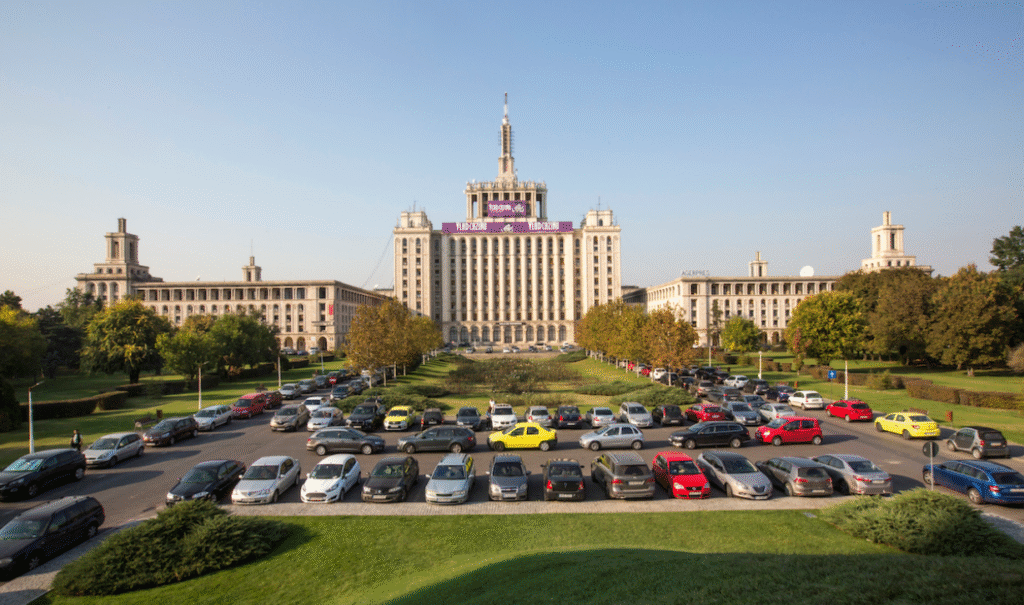
One example of this transformation is the House of the Free Press, originally designed as the headquarters of state-controlled media. This imposing Stalinist-style structure still stands as a relic of Romania’s propaganda machine but has since taken on a new role in the city’s cultural landscape.
Bucharest’s communist-era public squares, such as Piața Revoluției (Revolution Square), now serve as reminders of Romania’s fight for freedom. It was here, in December 1989, that Ceaușescu’s rule came to an end during the Romanian Revolution. The square’s monuments and memorials, including the Rebirth Memorial, commemorate those who lost their lives in the fight against dictatorship, marking a defining moment in the country’s modern history.
A City of Rebirth: Bucharest’s Cultural Revival and Green Spaces
Despite its turbulent past, Bucharest has embraced a cultural and artistic revival, transforming into a city where creativity and innovation flourish. The city’s alternative art scene thrives in repurposed industrial buildings, with spaces like the former cotton factory Combinatul Fondului Plastic now hosting contemporary exhibitions, film screenings, and underground music events. Carturesti Carusel, a beautifully restored 19th-century townhouse, has become one of the most stunning bookstores in the world, blending history, literature, and design into a mesmerizing space for bibliophiles.
The creative energy of Bucharest is also reflected in its growing café culture. Specialty coffee shops and artisanal bakeries have taken root throughout the city, particularly in neighborhoods like Dorobanți and Floreasca, where stylish cafés blend Romanian tradition with modern trends. Meanwhile, hidden gardens and rooftop bars provide perfect retreats from the urban rush, offering views of both historic landmarks and the evolving skyline.
One of the city’s greatest assets is its abundance of parks and green spaces. Herăstrău Park, the largest in Bucharest, surrounds Lake Herăstrău and offers a scenic escape with walking paths, open-air cafés, and boat rentals. Carol Park, with its tree-lined avenues and historic monuments, provides a more intimate setting, while Cișmigiu Gardens, the city’s oldest public park, remains a favorite spot for leisurely strolls and quiet moments by its ornamental lake.
Bucharest’s cultural revival extends to its festivals and nightlife, with events such as the George Enescu Festival bringing world-class classical music performances to the city, while electronic music festivals and jazz concerts attract younger crowds. The Lipscani district, once a decaying part of the city, has transformed into Bucharest’s nightlife hub, where bars, clubs, and music venues keep the city alive well into the early hours.
Bucharest is a city of grand contrasts, where echoes of its Belle Époque past meet the stark realities of its communist history, and where resilience fuels an ongoing cultural renaissance. Its mix of neoclassical palaces, socialist-era monuments, and emerging creative spaces make it one of Europe’s most intriguing capitals. Whether exploring its historic boulevards, delving into its revolutionary past, or experiencing its vibrant café culture, visitors to Bucharest will discover a city that is both complex and captivating. As Romania continues to embrace its European future, Bucharest stands as a city that refuses to be defined by any single era—a place where history, transformation, and artistic spirit come together in an ever-evolving urban tapestry.