Budapest’s Thermal Bliss: Danube Views, Ruin Bars, and Hungarian Heritage
Budapest, the grand capital of Hungary, is a city that captivates visitors with its stunning architecture, rich history, and unique blend of Eastern and Western European influences. Divided by the majestic Danube River, the city is composed of two distinct halves—Buda, with its rolling hills and historic grandeur, and Pest, the vibrant cultural and commercial heart. Together, they form a metropolis that seamlessly merges old-world charm with contemporary dynamism. Known for its therapeutic thermal baths, breathtaking riverfront views, and legendary ruin bars, Budapest offers a mix of relaxation, exploration, and nightlife that few cities can match. Whether admiring the illuminated Parliament building from a boat cruise, unwinding in century-old bathhouses, or sipping drinks in a crumbling courtyard bar filled with eclectic art, Budapest is a city that engages all the senses. From its imperial past to its modern creative energy, Budapest invites visitors to experience the essence of Hungarian heritage in every corner.
The Danube and Architectural Marvels: Budapest’s Iconic Skyline
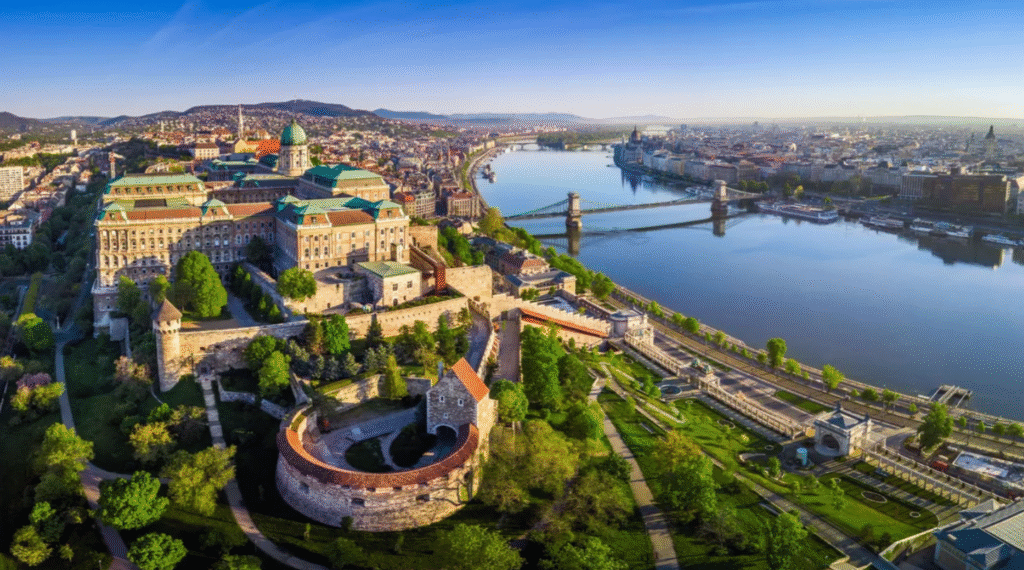
Few cities in the world can boast a riverfront as striking as Budapest’s. The Danube River, which gracefully divides the city, serves as both a geographical landmark and a source of inspiration for its most celebrated architectural masterpieces. The Chain Bridge, the first permanent crossing between Buda and Pest, remains an enduring symbol of the city’s unity and resilience. Walking across this historic bridge, visitors are treated to unparalleled views of Budapest’s skyline, with the Buda Castle perched on one side and the grand Parliament building dominating the other.
The Hungarian Parliament, one of the most magnificent legislative buildings in the world, is a neo-Gothic masterpiece that reflects the nation’s grandeur. With its intricate spires, massive dome, and riverside location, it is an unmissable highlight of any trip to Budapest. Guided tours offer a glimpse into its opulent interiors, where the Hungarian Crown Jewels are on display beneath golden ceilings and marble columns.
On the opposite bank, Buda Castle and the historic Castle District provide a window into Budapest’s royal past. The cobblestone streets lead to the Matthias Church, a strikingly colorful Gothic church with a roof adorned in intricate ceramic tiles. Nearby, the Fisherman’s Bastion offers some of the most breathtaking panoramic views of the city, with its fairy-tale-like towers overlooking the Danube and the sprawling cityscape beyond.
Further along the river, the Shoes on the Danube Bank memorial stands as a poignant tribute to the victims of World War II, reminding visitors of Budapest’s turbulent history and resilience. At sunset, a river cruise along the Danube reveals the city in its most enchanting light, with illuminated bridges and historic buildings casting shimmering reflections on the water.
Budapest’s Thermal Baths: A Tradition of Relaxation
One of Budapest’s most defining features is its network of thermal baths, a legacy of the city’s centuries-old bathing culture. The natural hot springs beneath the city have been used for healing and relaxation since Roman times, and today, Budapest proudly holds the title of “Spa Capital of the World.”
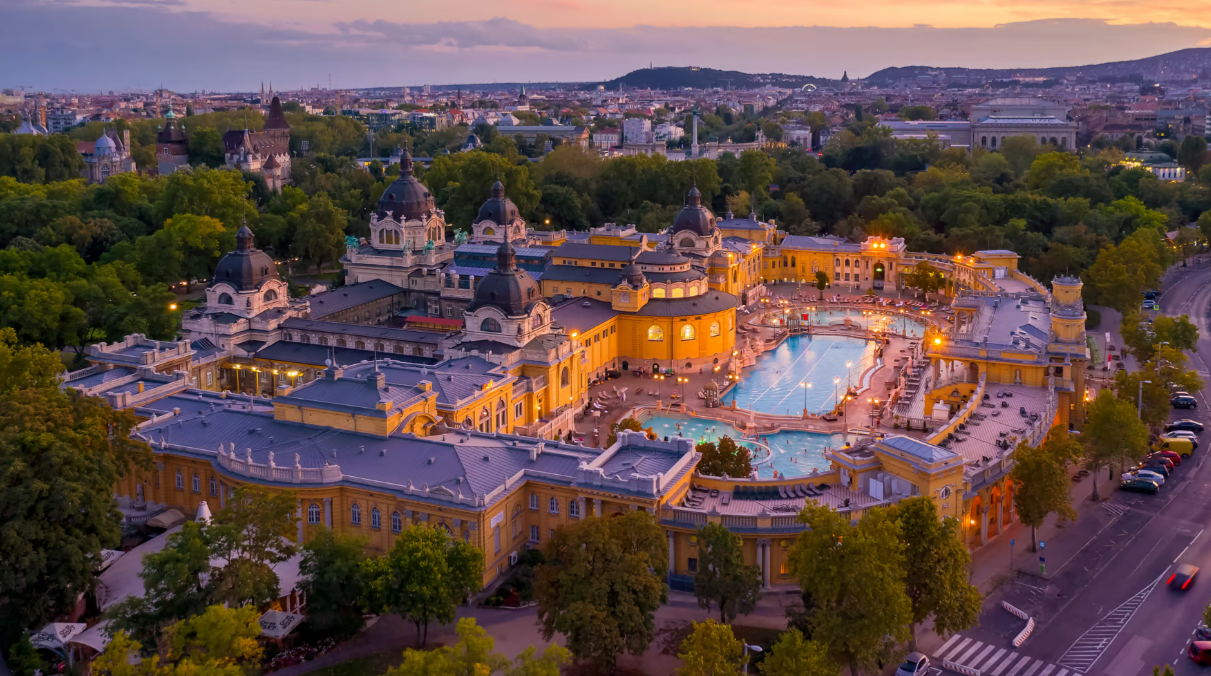
The most famous of these baths is Széchenyi Thermal Bath, an expansive complex of neo-Baroque grandeur located in City Park. Its outdoor pools, filled with warm mineral-rich waters, offer a year-round escape where locals and tourists alike gather to soak, socialize, and even play chess on floating boards. Inside, a labyrinth of saunas, steam rooms, and thermal pools provides an immersive experience in Hungarian wellness traditions.
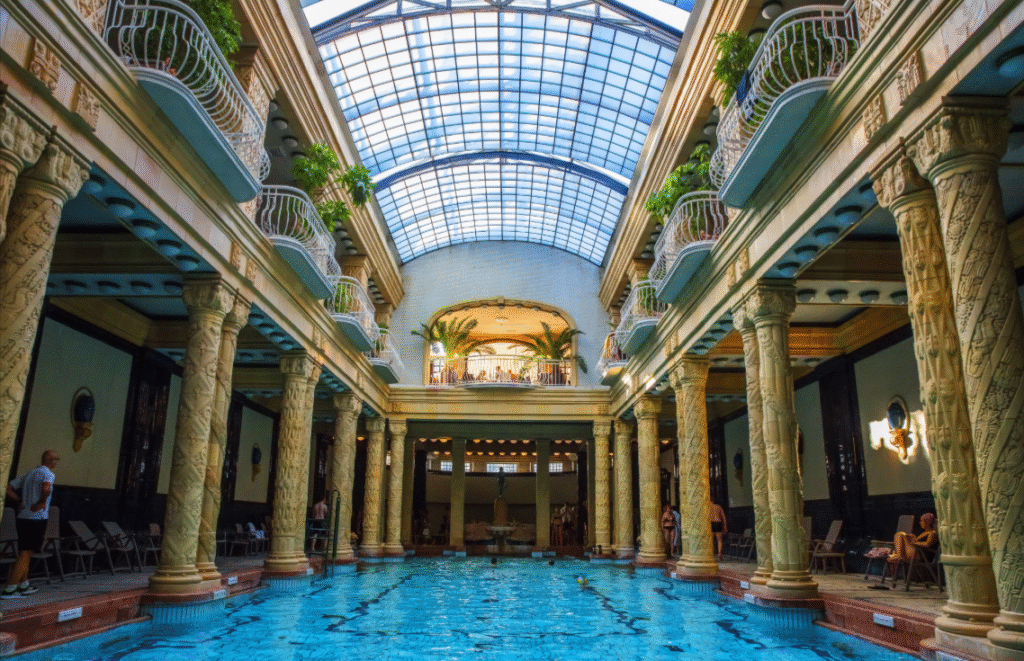
For a more historic setting, the Gellért Baths, housed within a stunning Art Nouveau hotel, offer an atmosphere of elegance and tranquility. Its ornate mosaics, stained glass windows, and Roman-style columns create an ambiance of old-world luxury, making it a favorite among those seeking a more refined spa experience. Another iconic choice is Rudas Baths, a relic of the Ottoman era featuring a domed central pool surrounded by centuries-old stone pillars, offering a unique blend of Turkish and Hungarian influences.
Beyond their therapeutic benefits, Budapest’s thermal baths serve as social hubs where people gather to unwind and connect. Whether soaking in the thermal waters, indulging in a massage, or experiencing a lively spa party at night, the city’s bath culture is an essential part of Budapest’s identity, blending history, health, and leisure in a way that few other cities can match.
Ruin Bars and Budapest’s Bohemian Nightlife
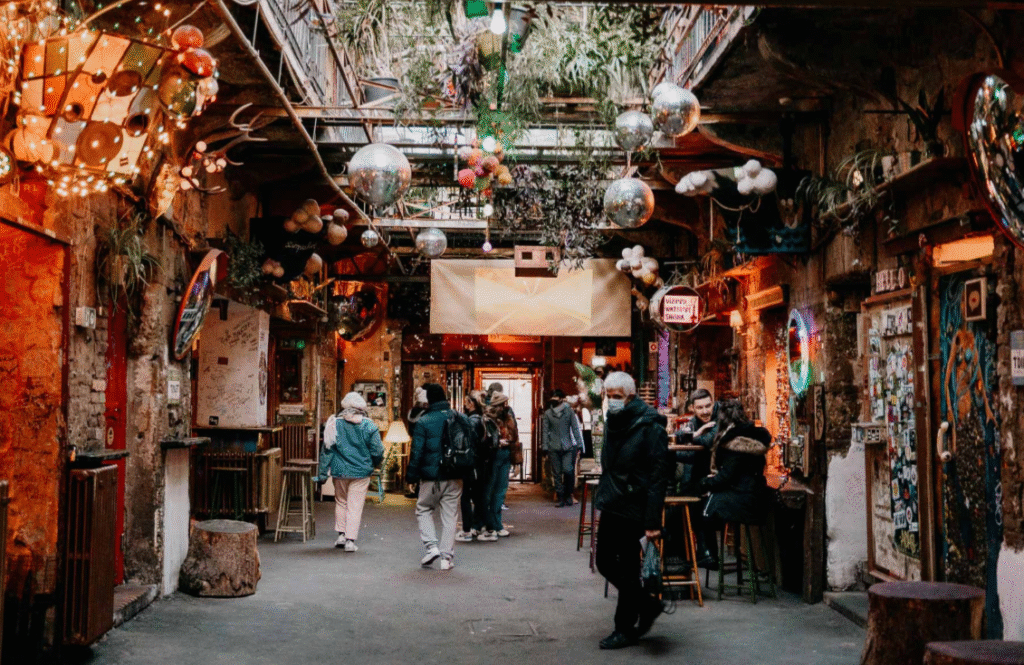
Budapest’s nightlife is as unique as its history, and nowhere is this more evident than in its famous ruin bars. These eclectic drinking establishments, located in abandoned buildings and courtyards, have become a defining feature of the city’s social scene. What began as an underground movement has evolved into a must-visit experience for anyone looking to experience Budapest’s creative and alternative spirit.
The original and most famous of these is Szimpla Kert, a sprawling bar that feels like a mix between an art installation, a flea market, and a bohemian hideaway. Its mismatched furniture, graffiti-covered walls, and quirky décor—ranging from bathtubs used as seating to bicycles hanging from the ceiling—create an atmosphere that is both surreal and inviting. Each room offers a different vibe, from live music and DJs to film screenings and cultural events, making it a constantly evolving space of artistic expression.
Other notable ruin bars include Instant-Fogas, a massive multi-room complex with different music styles in each section, and Mazel Tov, a stylish ruin bar-meets-restaurant that blends Middle Eastern cuisine with Budapest’s signature industrial-chic aesthetic. Many of these bars serve as community spaces during the day, hosting farmers’ markets, craft fairs, and creative workshops before transforming into buzzing nightlife spots after dark.
Beyond the ruin bars, Budapest’s nightlife offers something for everyone. Jazz clubs like Opus Jazz Club and Budapest Jazz Club provide a more intimate setting for music lovers, while the city’s lively clubs and dance venues cater to those looking for a high-energy night out. Whether sipping on pálinka, Hungary’s traditional fruit brandy, or enjoying craft cocktails in a candlelit bar, Budapest’s nightlife scene is a blend of old and new, tradition and reinvention.
Budapest is a city that offers an irresistible combination of history, relaxation, and vibrant energy. From the majestic Danube and its stunning architectural landmarks to the soothing waters of its legendary thermal baths, every experience in Budapest is infused with a sense of grandeur and cultural richness. The city’s ruin bars add an unexpected twist, turning abandoned spaces into hubs of creativity and nightlife. Budapest’s ability to honor its past while embracing innovation makes it a destination that appeals to all travelers, whether seeking historic exploration, indulgent relaxation, or an unforgettable night out. As the heart of Hungary, Budapest continues to enchant and inspire, inviting visitors to immerse themselves in its timeless beauty and contemporary spirit.