Luxembourg City’s Fairytale Fortresses: A Tiny Capital with Grand History
Luxembourg City, the capital of one of Europe’s smallest yet most fascinating countries, is a place where medieval fortresses, dramatic cliffs, and modern institutions coexist in a seamless blend of past and present. Despite its compact size, the city holds an outsized role in European history and politics, serving as one of the three official capitals of the European Union while also being home to some of the continent’s most stunning fortifications. The city’s geography is equally captivating, perched atop rocky plateaus and overlooking deep gorges, earning it the title of the “Gibraltar of the North.” With its fairytale-like castles, cobbled streets, and a cosmopolitan yet tranquil atmosphere, Luxembourg City offers visitors an experience that is both grand and intimate. Whether exploring its UNESCO-listed Old Town, venturing through its underground casemates, or enjoying its vibrant café culture, the city invites travelers to discover a hidden gem in the heart of Europe.
The Mighty Fortifications: A Fortress City Through the Ages
Luxembourg City’s defining feature has long been its fortifications, which played a crucial role in shaping the city’s identity. As a strategic stronghold, Luxembourg was once one of the most fortified places in Europe, attracting the interest of empires and military powers for centuries. Today, its remains stand as a testament to its past, offering a glimpse into the city’s medieval and military heritage.
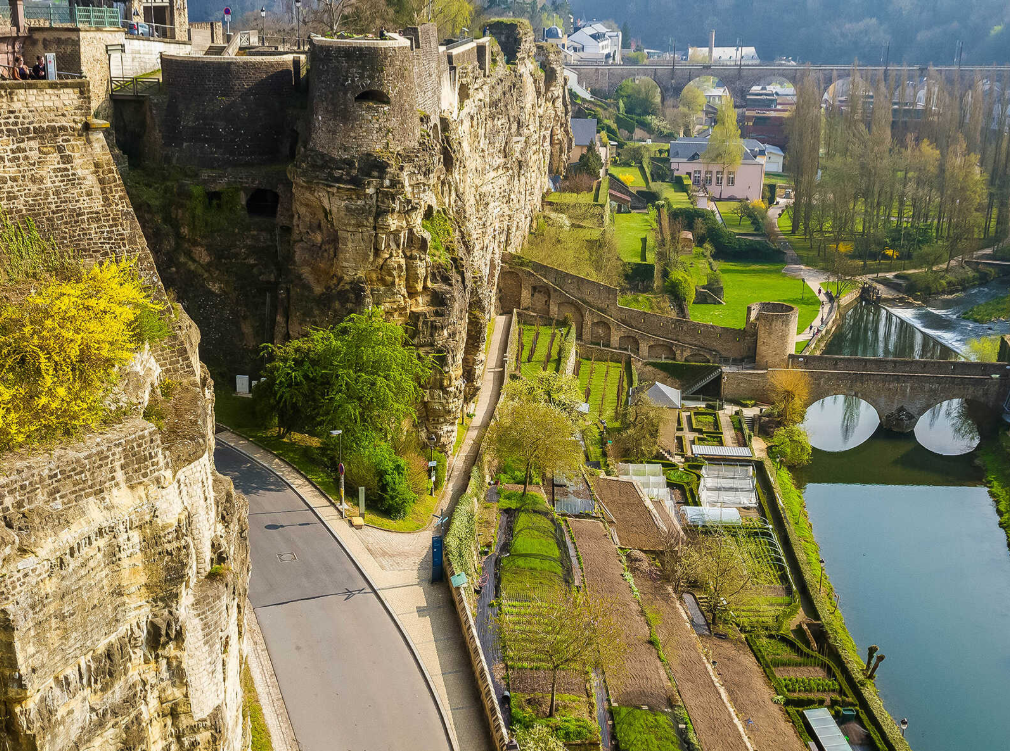
One of the most iconic sites is the Bock Casemates, a network of underground tunnels carved into the rocky cliffs of Luxembourg. Originally constructed in the 17th century, these tunnels once housed soldiers, artillery, and supplies, allowing the city to withstand lengthy sieges. Visitors can wander through the dimly lit passageways, emerging onto terraces that provide stunning views of the Alzette River and the lower town, Grund. The casemates are a UNESCO World Heritage site, preserving a legacy of ingenuity and resilience that helped Luxembourg defend itself against numerous invasions.
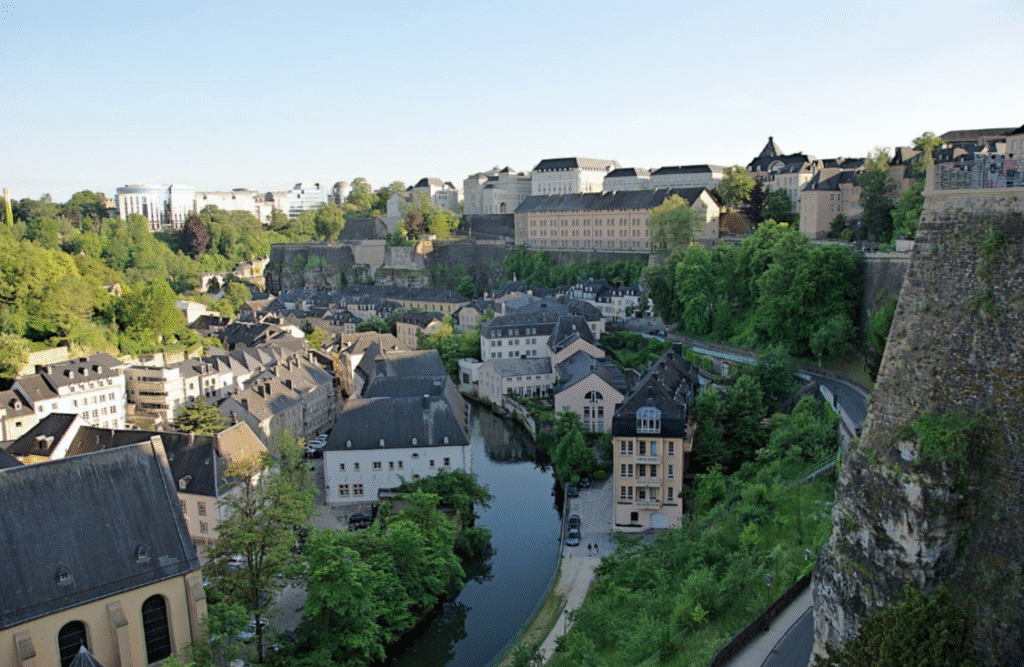
Above ground, the ruins of the Bock Fortress give visitors a sense of Luxembourg’s strategic importance in medieval Europe. Once the core of the city’s defenses, the fortress was partially dismantled in the 19th century as part of a neutrality agreement, but its remnants still evoke a sense of grandeur. From the Chemin de la Corniche, often called “Europe’s most beautiful balcony,” one can admire breathtaking views of the fortress walls and the lush valley below, a striking contrast between nature and military architecture.
Beyond the Bock, Luxembourg’s fortifications extend to the Vauban Towers and the Three Towers, remnants of an elaborate defense system built by the famous French military engineer Sébastien Le Prestre de Vauban. These structures provide insight into how Luxembourg evolved from a medieval stronghold into a sophisticated, multi-layered fortress that once ranked among the most formidable in Europe.
The Old Town and the Grand Ducal Palace: A Blend of Elegance and Tradition
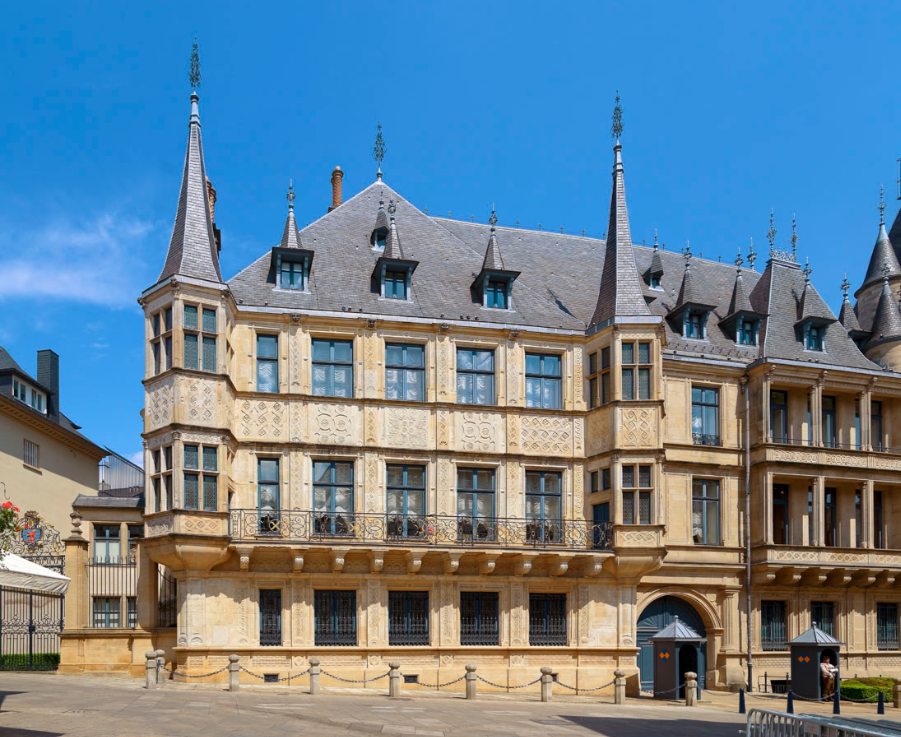
Luxembourg City’s Old Town is a captivating district where medieval charm meets stately grandeur. At its heart is the Grand Ducal Palace, the official residence of the Grand Duke of Luxembourg. This Renaissance-style palace, with its elaborate facade and ornate balconies, serves as both a symbol of the country’s monarchy and a working government institution. During the summer months, guided tours allow visitors to explore its lavish interiors, from the grand reception halls to the intricately decorated state rooms.
A short stroll from the palace leads to Place Guillaume II, a lively square surrounded by elegant buildings and home to an equestrian statue of Grand Duke William II. This bustling plaza hosts open-air markets, concerts, and public events, making it a popular gathering place for both locals and tourists. Nearby, the Notre-Dame Cathedral, a striking example of Gothic and Renaissance architecture, is the city’s most important religious site. Its stained-glass windows, towering spires, and elaborate crypt, which houses the tombs of the Grand Dukes, add to the city’s regal atmosphere.
Luxembourg’s Old Town is a delight to explore, with its winding streets, quaint cafés, and hidden courtyards offering unexpected discoveries at every turn. The Place d’Armes, often called the city’s living room, is another inviting space where visitors can relax at an outdoor café while listening to live music performances. With its charming pedestrian-friendly streets, the Old Town captures the essence of Luxembourg’s blend of history and modern sophistication.
For those interested in culture and history, the Luxembourg City History Museum provides a fascinating journey through the city’s past, using interactive exhibits and historical artifacts to tell the story of its transformation from a medieval fortress to a thriving financial and political hub.
The Lower Town and Natural Beauty: The Tranquil Side of Luxembourg
While the Upper Town impresses with its grand architecture and fortifications, the Lower Town, known as Grund, offers a completely different side of Luxembourg—one that is serene, picturesque, and deeply connected to nature. Nestled along the banks of the Alzette River, Grund feels like a separate world, with its stone bridges, riverside paths, and charming houses that seem untouched by time.
Grund is a favorite spot for those seeking a peaceful escape from the city’s busy center. The district’s scenic walking trails lead to hidden gardens, historic monasteries, and old mills that reflect Luxembourg’s medieval heritage. The Neumünster Abbey, once a Benedictine monastery and later a prison, now serves as a cultural and arts center, hosting exhibitions, concerts, and performances in its beautifully restored halls.
For nature lovers, Luxembourg offers an abundance of green spaces within and beyond the city. The Pétrusse Valley Park, situated between the Upper and Lower Towns, is a lush retreat where visitors can walk along tree-lined paths, explore rock formations, and enjoy spectacular views of the city’s bridges and fortifications. A little further afield, the Müllerthal region, known as Luxembourg’s Little Switzerland, features dramatic rock formations, dense forests, and picturesque waterfalls, making it an ideal day-trip destination for outdoor enthusiasts.
Luxembourg’s commitment to environmental preservation and sustainability is evident in its extensive network of parks and its well-planned urban landscape. Despite its role as a financial and political hub, the city retains a strong connection to nature, offering a rare combination of urban convenience and rural beauty.
Luxembourg City may be small, but its rich history, architectural beauty, and enchanting landscapes make it one of Europe’s most captivating capitals. From its mighty fortifications and medieval Old Town to its tranquil riverside retreats, the city offers a diverse and immersive experience that defies its modest size. Whether exploring its historic tunnels, marveling at grand palaces, or strolling along scenic riverbanks, visitors will find that Luxembourg is a place where the past and present merge in a way that feels both intimate and majestic. With its fairytale-like ambiance, strategic importance, and unique blend of cultures, Luxembourg City is a hidden gem waiting to be discovered, offering a journey through history and elegance in the heart of Europe.